


The Eisenhower Matrix, also known as the Eisenhower Decision Matrix, is a time management and productivity tool that helps individuals prioritize tasks based on their urgency and importance. It is named after Dwight D. Eisenhower, the 34th President of the United States, who was known for his effective time management skills.
The matrix categorizes tasks into four quadrants:
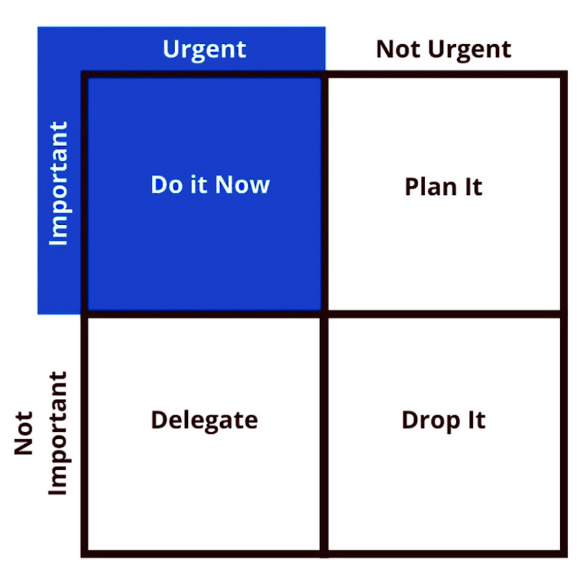

1. Urgent and Important
Tasks in this quadrant are both urgent and important, requiring immediate attention. These tasks should be dealt with promptly to prevent negative consequences. They are often related to critical deadlines, emergencies, or important tasks that can’t be postponed.
Critical project deadlines that are rapidly approaching, responding to time-sensitive client emergencies, attending to medical emergencies, and addressing urgent issues that have the potential to cause significant financial or reputational damage if not dealt with immediately are some of the examples of urgent and important tasks in Eisenhower Matrix. These tasks require immediate attention to prevent negative consequences and ensure the smooth functioning of important processes or projects.
2. Important but Not Urgent
Tasks in this quadrant are important but not time-sensitive. They might involve long-term planning, strategic thinking, personal development, and goal setting. While they don’t require immediate attention, they are crucial for long-term success.
Important but not urgent tasks in the Eisenhower Matrix encompass activities such as long-term strategic planning, setting and working towards personal and professional goals, investing time in skill development and self-improvement, maintaining and nurturing important relationships, conducting research and exploration to stay ahead of industry trends, and engaging in proactive preventive measures to avoid potential future problems. While these tasks may not demand immediate action, they play a vital role in achieving long-term success, growth, and fulfillment.
3. Urgent but Not Important
Tasks in this quadrant are urgent but not necessarily important in the grand scheme of things. They often involve interruptions, distractions, and minor tasks that can consume time if not managed properly. Delegating or finding efficient ways to handle these tasks can be beneficial.
Urgent but not important tasks in the Eisenhower Matrix include responding to non-critical emails and messages that require immediate attention but don’t significantly contribute to important goals, attending meetings that are primarily informational rather than directly impactful, handling minor administrative tasks that can be delegated to others, and addressing last-minute requests that arise from others’ priorities but do not align with your own key objectives. These tasks can often create a sense of urgency but may not contribute significantly to the overall strategic direction or long-term success of your endeavors.
4. Not Urgent and Not Important
Tasks in this quadrant are neither urgent nor important. These tasks are often time-wasters and distractions that don’t contribute significantly to your goals or well-being. Minimizing or eliminating these tasks can free up valuable time.
Not urgent and not important tasks in the Eisenhower Matrix encompass activities like excessive social media scrolling, watching mindless television, engaging in aimless web browsing, participating in trivial discussions, and other forms of unproductive leisure that provide little to no value in terms of personal or professional development. These tasks often consume time without contributing to important goals or well-being. While they may provide short-term relaxation, they can become significant time-wasters when they take precedence over tasks that truly matter.
How Eisenhower Matrix Helps Us
The Eisenhower Matrix helps individuals prioritize tasks by considering their urgency and importance. The goal is to focus on tasks that are both important and urgent while also allocating time for tasks that are important but not urgent. By avoiding tasks that are neither important nor urgent, individuals can make better use of their time and increase their productivity.
The matrix provides a visual framework for assessing tasks and making informed decisions about how to allocate time and resources. It can be particularly useful for managing workloads, improving time management, and reducing stress by focusing on tasks that align with goals and priorities.
Using the Eisenhower Matrix in your personal life can help you prioritize tasks, reduce stress, and focus on what truly matters. Here’s how you can plan to incorporate it into your daily routine:
1. List Your Tasks
Start by listing all the tasks you need to complete, both big and small.
2. Categorize Tasks
Divide your tasks into the four quadrants of the Eisenhower Matrix:
- Urgent and Important: Tasks that require immediate attention and have a significant impact on your goals and well-being.
- Important but Not Urgent: Tasks that are important for your long-term success and well-being, but don’t require immediate attention.
- Urgent but Not Important: Tasks that demand your attention quickly but don’t contribute significantly to your goals.
- Not Urgent and Not Important: Tasks that are time-wasters and have little to no value.
3. Prioritize Quadrants
Focus on the tasks in the “Urgent and Important” quadrant first. These tasks need your immediate attention to prevent negative consequences. Then, allocate time to the “Important but Not Urgent” quadrant. These tasks contribute to your long-term growth and success. Consider scheduling specific time blocks for these tasks to ensure they don’t get overlooked.
4. Delegate and Streamline
For tasks in the “Urgent but Not Important” quadrant, consider if any can be delegated or streamlined to save time. Avoid spending excessive time on tasks that don’t align with your priorities.
5. Minimize Non-Essentials
Tasks in the “Not Urgent and Not Important” quadrant should be minimized or eliminated. Be mindful of how much time you spend on activities that provide little value.
6. Regular Review
Regularly review your task list and update it based on changing priorities. As tasks move into different quadrants, adjust your focus accordingly.
7. Time Blocking
Consider using time blocking to allocate specific time slots for tasks in the “Important but Not Urgent” quadrant. This can help you proactively work on tasks that contribute to your long-term goals.
8. Digital Detox
To minimize distractions and non-essential tasks, consider periodic digital detoxes, where you disconnect from digital devices and focus on tasks that matter.
9. Practice Self-Care
Remember that self-care activities, like exercise, relaxation, and spending quality time with loved ones, often fall into the “Important but Not Urgent” quadrant. Prioritize these activities to maintain your well-being.
10. Adapt and Adjust
Life is dynamic, so be flexible and willing to adjust your plan as circumstances change. The goal is to ensure that your time and energy are invested in tasks that align with your values, goals, and well-being.
By consistently using the Eisenhower Matrix, you can enhance your time management skills, make better decisions about task prioritization, and lead a more balanced and fulfilling personal life.