


We have discussed mindset many times, but it’s something that needs constant reminders and repetition. Negative thoughts can easily take control of our minds and lives if we don’t manage and master our thoughts. Please refer to the archive and read all the articles related to the mind, thoughts, and karma when you have time. I especially recommend these two:
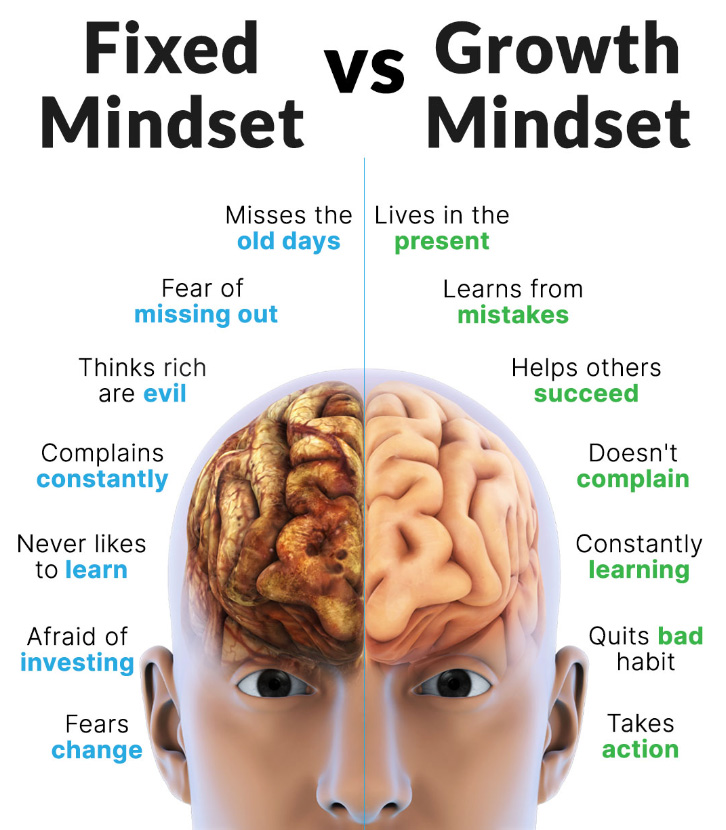
Now let’s compare two groups of people with completely different mindsets. The first group is called the fixed mindset group because they have fixed their thoughts on some useless and negative things that they never want to or know how to get rid of them:
1. They miss the old days.
Missing the old days, a common sentiment among those with a fixed mindset, can be harmful because it fosters nostalgia and stagnation. By idealizing the past, individuals may resist change and growth, hindering their ability to adapt to new circumstances and opportunities. This mindset may lead to a reluctance to embrace innovation and progress, ultimately impeding personal development and societal advancement. Instead of dwelling on what was, fostering a growth mindset encourages embracing the present and future with an open mind, allowing for continued learning, resilience, and evolution.
2. They have a fear of missing out.
Fearing missing out, a characteristic often associated with a fixed mindset, can be detrimental because it perpetuates comparison and discontentment. Constantly worrying about what others are doing or achieving can lead to feelings of inadequacy and anxiety, undermining one’s sense of self-worth and fulfillment. This mindset can also prevent individuals from fully engaging in their own experiences, as they are preoccupied with external validation and approval. Instead of focusing on external benchmarks of success or popularity, cultivating a growth mindset encourages embracing one’s unique journey and finding fulfillment in personal growth and authenticity.
3. They think the rich are evil.
Believing that the rich are inherently evil, can be harmful because it oversimplifies complex social dynamics and perpetuates negative stereotypes. This mindset fosters resentment and division rather than constructive dialogue and collaboration. It can lead to a lack of motivation to strive for financial success or to pursue opportunities for personal and professional growth, as individuals may view wealth acquisition as inherently immoral. Additionally, this belief may hinder empathy and understanding towards individuals of higher socioeconomic status, inhibiting constructive engagement with diverse perspectives and hindering potential avenues for social and economic advancement. Instead, fostering a growth mindset encourages critical thinking and nuanced understanding of wealth distribution, promoting empathy, collaboration, and proactive efforts towards positive societal change.
4. They complain constantly.
Constant complaining, a habit often associated with a fixed mindset, can be harmful because it fosters a negative outlook and perpetuates a victim mentality. By constantly focusing on what is wrong or lacking, individuals with this mindset may overlook opportunities for growth and positive change. This pattern of behavior not only affects their own mental well-being but also impacts their relationships and overall productivity. Constant complaining can create a toxic environment, driving away support and collaboration from others. Moreover, it reinforces a sense of powerlessness, as individuals fail to take responsibility for their circumstances or seek proactive solutions. Instead of dwelling on problems, fostering a growth mindset encourages resilience, problem-solving, and a focus on constructive action to overcome challenges and achieve personal and professional goals.
5. They never like to learn and think they already know enough.
Refusing to embrace learning and believing that one already possesses enough knowledge, hallmarks of a fixed mindset, can be harmful because it stagnates personal and professional growth. By closing themselves off to new information and perspectives, individuals limit their potential for innovation, adaptation, and advancement. This mindset fosters complacency and inhibits critical thinking, hindering the ability to solve complex problems or navigate changing environments effectively. Moreover, it undermines opportunities for personal development and can lead to missed chances for career advancement or personal fulfillment. Embracing a growth mindset, on the other hand, entails a continuous thirst for knowledge and a willingness to challenge existing beliefs, fostering resilience, creativity, and a lifelong commitment to learning and improvement.
6. They are afraid of investing.
Being afraid of investing, a common trait among those with a fixed mindset, can be harmful because it limits opportunities for financial growth and security. By avoiding investment opportunities out of fear of failure or loss, individuals miss out on the potential benefits of compounding returns and diversified portfolios. This mindset perpetuates a cycle of financial stagnation and dependency on stagnant income sources, hindering long-term wealth accumulation and financial independence. Moreover, it reinforces a scarcity mentality, where individuals focus on preserving what they have rather than seeking opportunities for growth and expansion. Embracing a growth mindset in financial matters involves understanding and managing risk, seeking knowledge about investment options, and being open to calculated risks that can lead to greater financial prosperity and security in the future.
7. They have a fear of change.
Having a fear of change, a common characteristic of a fixed mindset, can be harmful because it hinders personal growth, adaptation, and resilience. Resisting change prevents individuals from embracing new opportunities and experiences, leading to stagnation in both personal and professional spheres. This fear often stems from a desire to maintain comfort and familiarity, but it ultimately stifles progress and innovation. By avoiding change, individuals miss out on valuable learning experiences and may become ill-prepared to navigate inevitable transitions in life. Embracing a growth mindset involves viewing change as an opportunity for growth and development, fostering flexibility, creativity, and a willingness to step outside of one’s comfort zone in pursuit of personal and professional fulfillment.
The second group is called the growth mindset group because their mindset always enables them to grow and progress:
1. They live in present.
Living in the present is beneficial because it fosters mindfulness, appreciation, and proactive engagement with life’s opportunities. By focusing on the present moment, individuals can fully immerse themselves in experiences, cultivate gratitude for what they have, and make intentional choices that align with their goals and values. This mindset promotes resilience in the face of challenges, as it encourages adaptability and learning from setbacks. Embracing the present allows individuals to savor life’s moments, build meaningful connections, and pursue personal and professional growth with enthusiasm and purpose.
2. They learn from mistakes.
Learning from mistakes is invaluable because it fosters resilience, personal growth, and improvement. Instead of viewing failures as setbacks, individuals with a growth mindset see them as opportunities for learning and development. By analyzing mistakes, identifying areas for improvement, and adapting their approach, they continuously refine their skills and knowledge. This mindset cultivates a sense of empowerment and optimism, as individuals become more adept at overcoming challenges and achieving their goals. Embracing mistakes as part of the learning process not only enhances problem-solving abilities but also fosters a mindset of continuous improvement and innovation.
3. They help others succeed.
Helping others succeed is beneficial because it fosters collaboration, empathy, and collective progress. Individuals with a growth mindset recognize that everyone’s success contributes to a larger ecosystem of growth and opportunity. By supporting others in their endeavors, they cultivate stronger relationships, build trust, and create a culture of mutual support and encouragement. This mindset not only enhances personal fulfillment but also contributes to a more supportive and resilient community where individuals thrive together. Embracing the success of others not only uplifts individuals but also fuels a cycle of positivity and achievement, ultimately leading to greater collective success and well-being.
4. They don’t complain.
Not complaining is beneficial because it cultivates resilience, positivity, and proactive problem-solving. Instead of dwelling on problems, individuals with a growth mindset focus on finding solutions and opportunities for improvement. By maintaining a positive outlook and taking responsibility for their circumstances, they foster a sense of empowerment and agency. This mindset promotes a constructive approach to challenges, enabling individuals to overcome obstacles and achieve their goals with determination and optimism. Additionally, refraining from complaining fosters healthier relationships and a more positive environment, contributing to personal well-being and collective success.
5. They constantly learn.
Constantly learning, a core trait of a growth mindset, is invaluable because it fuels personal growth, adaptation, and innovation. Individuals with a growth mindset embrace learning as a lifelong journey, recognizing that knowledge acquisition enhances their skills and abilities. By seeking out new information, challenging assumptions, and exploring diverse perspectives, they remain adaptable and resilient in the face of change. This mindset fosters creativity, problem-solving skills, and a willingness to step outside of comfort zones to pursue new opportunities. Embracing a mindset of continuous learning not only enriches individuals’ lives but also contributes to personal and professional development, ultimately leading to greater fulfillment and success.
6. They quit bad habits.
Quitting bad habits, a practice often associated with a growth mindset, is beneficial because it fosters personal growth, resilience, and well-being. By recognizing and actively addressing negative behaviors, individuals with a growth mindset demonstrate a commitment to self-improvement and positive change. Breaking free from harmful habits allows for the redirection of energy and focus towards more constructive pursuits, leading to greater productivity, satisfaction, and overall life fulfillment. This mindset encourages individuals to embrace challenges, learn from setbacks, and continuously strive for personal excellence, ultimately fostering a healthier and more fulfilling lifestyle.
7. They take action.
Taking action, a fundamental aspect of a growth mindset, is crucial because it propels individuals towards their goals and fosters progress. Rather than being paralyzed by fear of failure or uncertainty, individuals with a growth mindset embrace challenges and actively seek opportunities for growth and improvement. By taking initiative and pursuing their aspirations, they cultivate resilience, confidence, and a sense of agency over their lives. This proactive approach not only accelerates personal and professional development but also empowers individuals to overcome obstacles and achieve their full potential. Embracing a mindset of action enables individuals to turn aspirations into reality and create meaningful change in their lives and communities.
What About You?
Individuals with a fixed mindset lack the characteristics of the growth mindset group entirely. However, most people do not exclusively belong to one of these groups; at times, they may exhibit fixed mindset traits, while at others, they may display characteristics of the growth mindset. Nonetheless, to continually improve in all aspects of life, it’s essential to fully embrace the growth mindset.
After reviewing the lists above, reflect on which features from both groups resonate with you. Please share your thoughts and experiences by posting comments using the form below. Thank you!😃❤️🌺🌹
We achieve our goals, not immediately, but slowly and surely!
Learn More How This System Works:

You can see the same video as slides:
More about this revolutionary system:
- LuckScout in Simple Words
- What LuckScout Is NOT
- LuckScout Is Created Based on Love❤️
- How Does LuckScout Work?
- Why Is LuckScout Innovative, Revolutionary and Unique?
- LuckScout Is a Strong Community to Make Everyone Strong
- The Safest and Best Way to Achieve Financial Freedom
- A Great Way to Achieve Financial Freedom
- LuckScout Looks Simple, But It Is the Most Advanced System Ever
- The Modern Form of Affiliate System
- How to Make Money Online No Experience No Investment No Scam
- How Long Does It Take to Succeed?!!
- Make Money While You Sleep😴
- Get Ready for the Luckscout Trading Program
- How Compound Interest Works With a Small Budget
- A Simple Success Formula that Works Like a Charm
- The LuckScout Compound Growth Engine
- The LuckScout Gold Program💰🥰
- Fresh Insights Into Luckscout
- How The LuckScout Marketplace Benefits Our Members
- LuckScout Infinite Credit Scheme
- LuckScout Payment Plans


- Do I Need a Laptop?


- Answering Some Questions About LuckScout
- Financial Freedom: A Simple Roadmap for Everyone

And please see these pages too:
- Make Money with LuckScout
- Your Points
- FAQs
- Become an Independent Self-Sufficient Wealth-Builder for Free and Risk-Free
Haven’t you joined The LuckScout Community yet???
Click Here to sign up.
See you on board!😃❤️🌺🌹💝🌸🎊🎉✨🌹👑🍺👏