

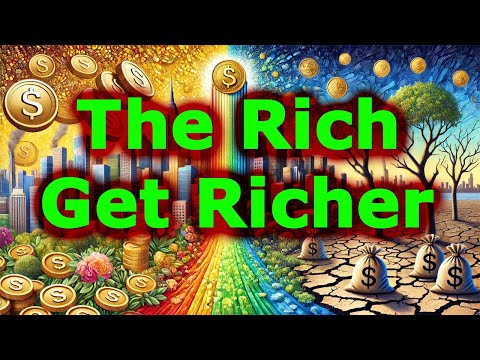
Some say that the rich get richer because the poor often view every opportunity with skepticism, perceiving them as potential scams. While this perspective is certainly valid, it’s not the only reason for the growing wealth gap. The poor frequently shy away from exploring new opportunities and remain within their comfort zones. However, there are numerous factors contributing to the rich getting richer and the poor getting poorer. The primary differentiator is their mindsets, which significantly influence their financial trajectories. If you’d like to learn more, I invite you to read the following article. It offers valuable insights to help fine-tune your mentality and transition from the ‘poor’ category to the ‘rich’ category:
1. Poor people seek the cheapest options, while rich people seek the best value.
Poor people often prioritize the cheapest options out of sheer necessity; they have limited financial resources and need to stretch their money as far as possible. In contrast, wealthy individuals seek the best value for their purchases, meaning they consider both quality and price, aiming for long-term durability and satisfaction.
The consequence of the mentality of opting for the cheapest goods for the poor is a cycle of deprivation. Cheaper products often lack quality, durability, and sometimes safety standards, leading to frequent replacements or repairs. In the long run, this cycle ends up costing more than investing in higher-quality items. Moreover, it restricts the poor from accessing opportunities for upward mobility since they are trapped in a cycle of continually replacing subpar items, hindering their ability to save and invest in more substantial assets like education or housing. This perpetuates their financial struggles, creating a barrier to breaking free from poverty.
2. Poor people save, while rich people invest.
Poor people often prioritize saving their money as a safety net for immediate needs and emergencies, as they may lack a financial cushion to fall back on. In contrast, wealthy individuals tend to focus on investing their money in assets such as gold, stocks, real estate, or businesses, aiming to grow their wealth over time.
The consequences of the mentality of saving for the poor are that their savings may not keep pace with inflation, leading to a gradual loss of purchasing power, and they miss out on potential opportunities for wealth accumulation through investments. This can perpetuate the cycle of poverty, as their savings alone may not be sufficient to improve their financial situation or break free from the daily struggle to make ends meet.
3. Poor people purchase liabilities, while rich people acquire assets.
Poor people often purchase liabilities, such as cars or consumer goods, because they provide immediate gratification or serve basic needs, even though they tend to depreciate in value or require ongoing expenses. In contrast, wealthy individuals focus on acquiring assets like gold, real estate, stocks, or businesses that have the potential to appreciate or generate income.
As a result, buying liabilities for the poor are twofold: first, they miss out on opportunities for their money to grow and generate wealth, and second, they may accumulate debt to finance these purchases, further straining their financial situation. This mindset can perpetuate the cycle of poverty as they struggle to build long-term financial stability and may remain trapped in a cycle of debt and financial insecurity.
Please read this too: Assets and Liabilities: Are You Getting Richer or Poorer?
4. Poor people lose money to inflation, while the rich own businesses to hedge against it.
Poor people often lose money to inflation because they tend to keep their savings in low-interest savings accounts or hold cash, which doesn’t keep pace with the rising cost of living. On the other hand, the wealthy often invest in assets like businesses that have the potential to generate income that can outpace inflation.
The consequence of this mentality for the poor is that over time, their purchasing power erodes as their savings lose value due to inflation. They struggle to afford basic necessities and are less likely to break free from the cycle of poverty, as their stagnant or depreciating savings can’t provide the financial security or growth opportunities needed to improve their economic situation.
5. Poor people often accept the status quo, while rich people take proactive steps.
Poor people often feel compelled to go along with life’s circumstances due to limited resources, restricted access to opportunities, and the pressing need to meet immediate basic needs. In contrast, the rich can take action, whether through investments, education, or entrepreneurship, because they have the financial security and resources to do so.
The consequences of this mentality for the poor are that they may remain stuck in a cycle of limited economic mobility, as they lack the means to pursue opportunities that could improve their situation. This can lead to a perpetuation of poverty, as the ability to break free from financial constraints becomes increasingly challenging.
Let’s be strong action takers who change the world. We create a community of financially free and rich people who also make other people financially independent and rich.