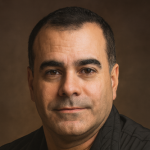
Robert Kiyosaki is an American entrepreneur, author, and speaker best known for his book “Rich Dad Poor Dad.” Born on April 8, 1947, in Hilo, Hawaii, Kiyosaki is of Japanese-American descent. He had a successful career in the business and investment world and gained recognition as a financial educator.
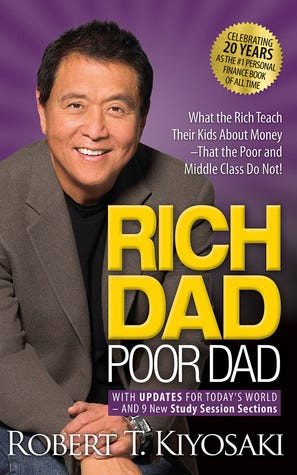 Kiyosaki’s most famous book, “Rich Dad Poor Dad,” was published in 1997 and has since become a bestseller. The book emphasizes financial literacy and presents Kiyosaki’s personal experiences and lessons from his two fathers: his real father (the poor dad) and his best friend’s father (the rich dad). It encourages readers to adopt a mindset focused on building wealth through investing, entrepreneurship, and financial education.
Following the success of “Rich Dad Poor Dad,” Kiyosaki has written numerous other books on personal finance and investing. Some of his other notable works include “Cashflow Quadrant,” “Rich Dad’s Guide to Investing,” and “Rich Dad’s CASHFLOW Quadrant.”
Kiyosaki is also a motivational speaker and has conducted seminars and workshops worldwide. He advocates for financial independence and encourages individuals to take control of their financial futures by learning about money, investing, and building passive income streams.
Although I may not agree with him on certain points, I highly recommend that everyone read Robert Kiyosaki’s book “Rich Dad Poor Dad.”
What Does Robert Kiyosaki Say in His “Rich Dad Poor Dad” Book?
In his book “Rich Dad Poor Dad,” Robert Kiyosaki shares his personal experiences and lessons about money and wealth. The book revolves around the contrasting financial philosophies and mindsets of his two fathers: his own father (the “poor dad”) and his best friend’s father (the “rich dad”). Here are some key ideas and principles discussed in the book:
1. Financial Literacy:
Kiyosaki emphasizes the importance of financial literacy and education. He believes that many people lack essential financial knowledge and that schools often fail to teach practical money management skills. He encourages readers to invest time in learning about money, investing, and personal finance.
2. Assets vs. Liabilities:
Kiyosaki introduces the concept of assets and liabilities. He defines assets as things that generate income or appreciate in value, while liabilities are expenses that drain money from one’s pocket. He advises focusing on acquiring assets that can generate passive income instead of accumulating liabilities that create financial burdens.
3. Cashflow Quadrant:
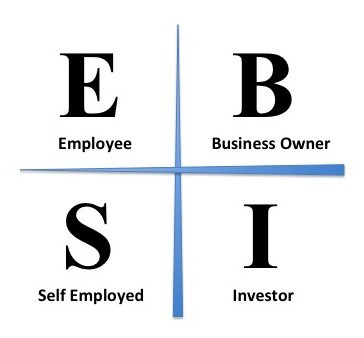
Kiyosaki presents the “Cashflow Quadrant,” a framework categorizing individuals into four groups based on their primary source of income:
- Employees (E)
- Self-Employed (S)
- Business Owners (B)
- Investors (I)
He argues that to achieve financial freedom, one should strive to move from the left side of the quadrant (E and S) to the right side (B and I) by building businesses and investing.
4. The Wealthy Mindset:
Kiyosaki emphasizes the importance of developing a wealthy mindset. He encourages readers to overcome fear and self-limiting beliefs about money and to adopt a mindset focused on creating wealth and financial independence. He also discusses the value of taking calculated risks and embracing failure as a learning opportunity.
5. Real Estate and Investing:
The book highlights real estate as one of the key avenues for building wealth. Kiyosaki promotes investing in real estate properties that generate cash flow and appreciate in value over time. He also emphasizes the power of investing in stocks, starting businesses, and building passive income streams.
It’s important to note that while “Rich Dad Poor Dad” has resonated with many readers and sparked conversations about financial literacy, wealth creation, and mindset, some of Kiyosaki’s ideas have drawn criticism and sparked debates among financial experts. It’s always advisable to approach financial advice with a critical mindset and consider various perspectives before making decisions.
If you don’t have time to read Robert Kiyosaki’s “Rich Dad Poor Dad,” here are some of the best tips I would love to share from this book with you:
Rich Dad Poor Dad Best Tips
Robert Kiyosaki’s “poor dad” in his book “Rich Dad Poor Dad” is characterized by his traditional approach to money and life. He represents the conventional mindset of working hard, getting a good education, and relying on job security. Kiyosaki portrays his poor dad as someone who had a high-paying job but struggled financially due to his lack of financial literacy and his focus on job security rather than wealth creation.
The poor dad believed in the importance of formal education and working for someone else, while having a fear of taking risks. He had a mindset centered around accumulating liabilities, such as a big house and expensive cars, which left him in a constant cycle of expenses and debt. Overall, Kiyosaki’s portrayal of his poor dad highlights the limitations of the traditional approach to money and the need for a different perspective on wealth creation and financial independence.
Conversely, Robert Kiyosaki’s “rich dad” in his book “Rich Dad Poor Dad” is depicted as an entrepreneurial and financially astute individual who possesses a different mindset when it comes to money. Kiyosaki’s rich dad embodies characteristics such as financial intelligence, a focus on building assets, and a willingness to take calculated risks. He encourages Kiyosaki to think critically, challenge conventional wisdom, and seek opportunities for wealth creation.
The rich dad emphasizes the value of financial education and developing skills in areas such as investing and entrepreneurship. He believes in leveraging other people’s time, money, and knowledge to create wealth and achieve financial independence. This rich dad’s mindset centers around building businesses, investing in income-generating assets, and creating multiple streams of passive income. Overall, Kiyosaki’s rich dad represents a paradigm of financial freedom, abundance, and a proactive approach to wealth creation.
Now, here is some advice from each of these two dads, who had completely opposite mindsets:
1. Education
Poor dad:
You HAVE to go to college!
Rich dad:
You should go to college if it’s part of your financial plan.

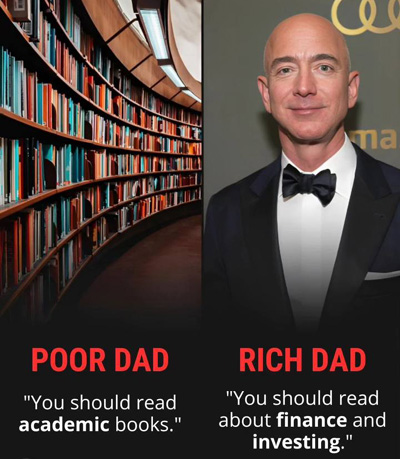
2. Reading
Poor dad:
You should read academic books!
Rich dad:
You should read about finance and investing.
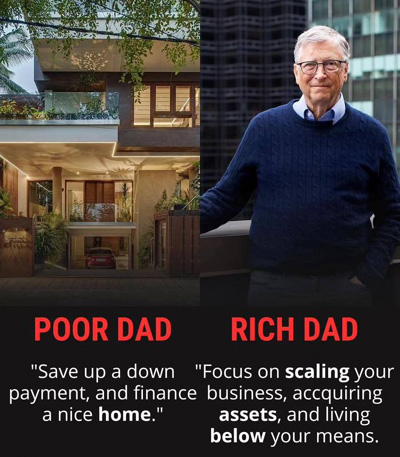
3. Assets and Liabilities
Poor dad:
Save up a down payment, and finance a nice home.
Rich dad:
Focus on scaling your business, acquiring assets, and living below your means.
4. Job and Business
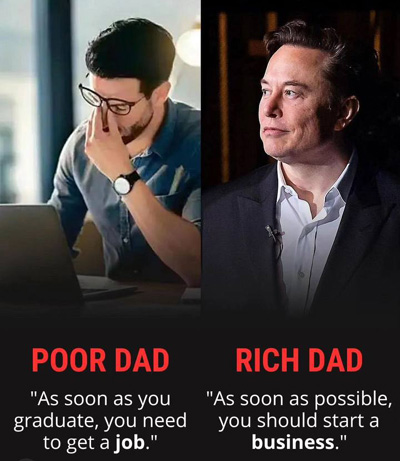
Poor dad:
As soon as you graduate, you need to get a job.
Rich dad:
As soon as possible, you should start a business.
5. Retirement
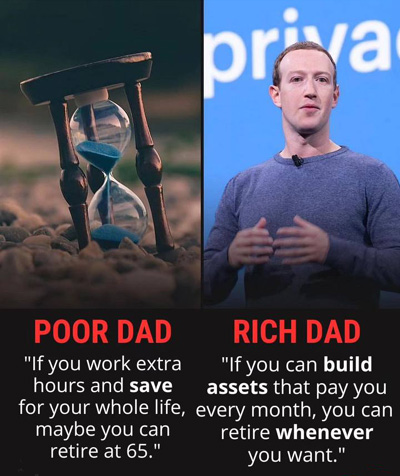
Poor dad:
If you work extra hours and save for your whole life, maybe you can retire at 65.
Rich dad:
If you can build assets that pay you every month, you can retire whenever you want.
What do you think? Do you agree with Kiyosaki’s rich dad or poor dad?
In The LuckScout Community, we focus on creating assets for our members to generate both active and passive income over time.
You are in the right place at the right time…
We achieve our goals, not immediately, but slowly and surely!
Learn How Our System Works:
You can see the same video as slides:
More about this revolutionary system:
- LuckScout in Simple Words
- What LuckScout Is NOT
- LuckScout Is Created Based on Love❤️
- How Does LuckScout Work?
- Why Is LuckScout Innovative, Revolutionary and Unique?
- LuckScout Is a Strong Community to Make Everyone Strong
- The Safest and Best Way to Achieve Financial Freedom
- A Great Way to Achieve Financial Freedom
- LuckScout Looks Simple, But It Is the Most Advanced System Ever
- The Modern Form of Affiliate System
- How to Make Money Online No Experience No Investment No Scam
- How Long Does It Take to Succeed?!!
- Make Money While You Sleep😴
- Get Ready for the Luckscout Trading Program
- How Compound Interest Works With a Small Budget
- A Simple Success Formula that Works Like a Charm
- The LuckScout Compound Growth Engine
And please see these pages too:
- Make Money with LuckScout
- Your Points
- FAQs
- Become an Independent Self-Sufficient Wealth-Builder for Free and Risk-Free
Haven’t you joined The LuckScout Community yet???
Click Here to sign up.
See you on board!😃❤️🌺🌹💝🌸🎊🎉✨🌹👑🍺👏