
You don’t see too many successful people around. Why? Because most people want immediate success, and when they don’t achieve it, they give up and move on to something else. They repeat this pattern throughout their lives. Even some successful people occasionally make the same mistake. In this post, I’ll share two examples that will both shock you and teach you valuable lessons that most people never get the chance to learn.
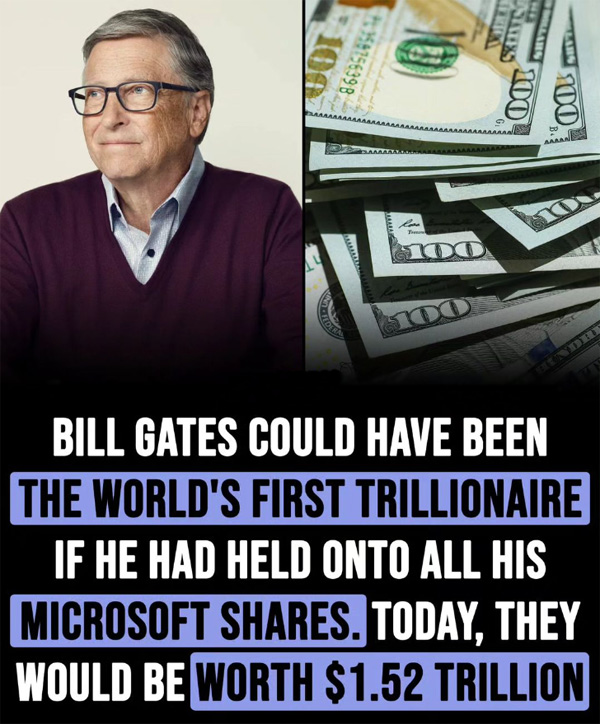
1. Did you know that if Bill Gates had kept all his Microsoft shares, they’d be valued at $1.52 trillion today, making him the world’s first trillionaire?
By selling most of his Microsoft shares, he lost this opportunity for good. As of August 2024, his net worth is approximately $132 billion, which is still remarkable. However, he could have been the first trillionaire and possibly the only one for decades. While this might not make a significant difference in his life—since he already has everything he could want—here, I’m talking about success and achievements, and what you stand to lose if you’re not patient and give up too soon. Surely, Bill Gates is not entirely happy about this, as he once said, “Success is a lousy teacher. It makes smart people think they can’t lose.” This suggests that, despite his extraordinary success, he recognizes that he has lost out in certain ways.
The lesson here is that we should not change our course or lose focus, especially when our project is doing well. We shouldn’t assume that something else will bring us success faster when we’re already focused on something we’re passionate about and excelling in. This is likely the mistake Bill Gates made. He sold many of his Microsoft shares and invested in other sectors, possibly because he thought those other sectors might work better for him, even though Microsoft was already thriving.
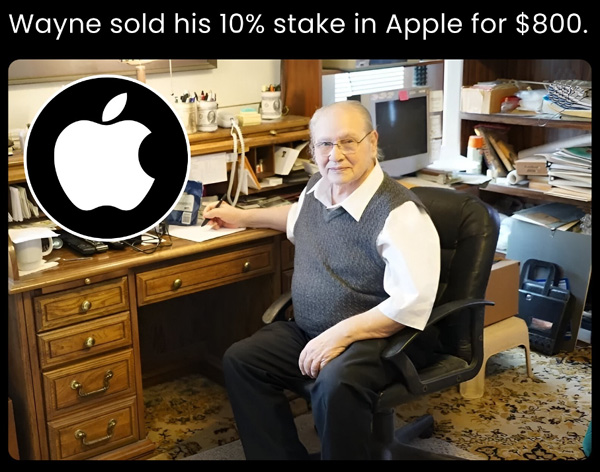
2. In 1976, Ron Wayne, one of the original co-founders of Apple, made a choice that has since become a legendary cautionary tale in the business world. Concerned about the company’s uncertain future and potential financial risks, Wayne decided to sell his 10% share in Apple for a mere $800. Little did he know that this decision would cost him a fortune. Had he kept his stake, those shares would have soared in value, reaching over $320 billion today, potentially placing him among the wealthiest people on the planet.
We learn similar lessons here as well, particularly that fear can be a significant factor in preventing us from reaching our goals. Fear can cause us to step back too easily without giving ourselves and our projects enough time. A lack of patience and the urge to rush towards our goals without allowing sufficient time for growth is one of the main reasons for failure. Life has taught this lesson the hard way to people like Bill Gates and Ron Wayne, and I have seen many others who ended up going nowhere because of the same issues.
If you want to make a difference, you must work hard, consistently, and patiently, and stay focused. You shouldn’t let shiny objects distract you and cause you to abandon your projects, as happened with Bill Gates. Not everyone is as fortunate as he is to remain a billionaire after making such a mistake. Ron Wayne is an example of this. His potential $320 billion wealth was reduced to just $800 in 1976. He underestimated Apple, just as Bill Gates underestimated Microsoft by thinking it couldn’t grow further. Many of those who join LuckScout also underestimate its potential and leave after a while to seek their fortune elsewhere, even though LuckScout consistently offers them more value each month than what Apple left Ron Wayne in 1976.
We achieve our goals, not immediately, but slowly and surely!
Learn More How This System Works:
You can see the same video as slides:
More about this revolutionary system:
- LuckScout in Simple Words
- What LuckScout Is NOT
- LuckScout Is Created Based on Love❤️
- How Does LuckScout Work?
- Why Is LuckScout Innovative, Revolutionary and Unique?
- LuckScout Is a Strong Community to Make Everyone Strong
- The Safest and Best Way to Achieve Financial Freedom
- A Great Way to Achieve Financial Freedom
- LuckScout Looks Simple, But It Is the Most Advanced System Ever
- The Modern Form of Affiliate System
- How to Make Money Online No Experience No Investment No Scam
- How Long Does It Take to Succeed?!!
- Make Money While You Sleep😴
- A Simple Success Formula that Works Like a Charm
- Fresh Insights Into Luckscout
- How The LuckScout Marketplace Benefits Our Members
- LuckScout Infinite Credit Scheme
- Do I Need a Laptop?


- Answering Some Questions About LuckScout
- Luckscout Is About Making a Fortune for You
- New Sources of Income
- Things You Didn’t Know About LuckScout
- Achieving Financial Freedom
And please see these pages too:
- Make Money with LuckScout
- Your Points
- FAQs
- Become an Independent Self-Sufficient Wealth-Builder for Free and Risk-Free
Haven’t you joined The LuckScout Community yet???
Click Here to sign up.
See you on board!😃❤️🌺🌹💝🌸🎊🎉✨🌹👑🍺👏